Volunteer Pond Dip Proves New Installation Is Healthy
Volunteers and SuDS+ staff recently completed a series of surveys on the SuDS+ site at Cleveland Terrace. The three techniques were pond dip, pollinator survey and bug count. Combined results should have given us an idea of the value to plants and insects of the site but the damp and cold weather conditions on the day reduced effectiveness of the pollinator and bug activities.
Pond Dipping
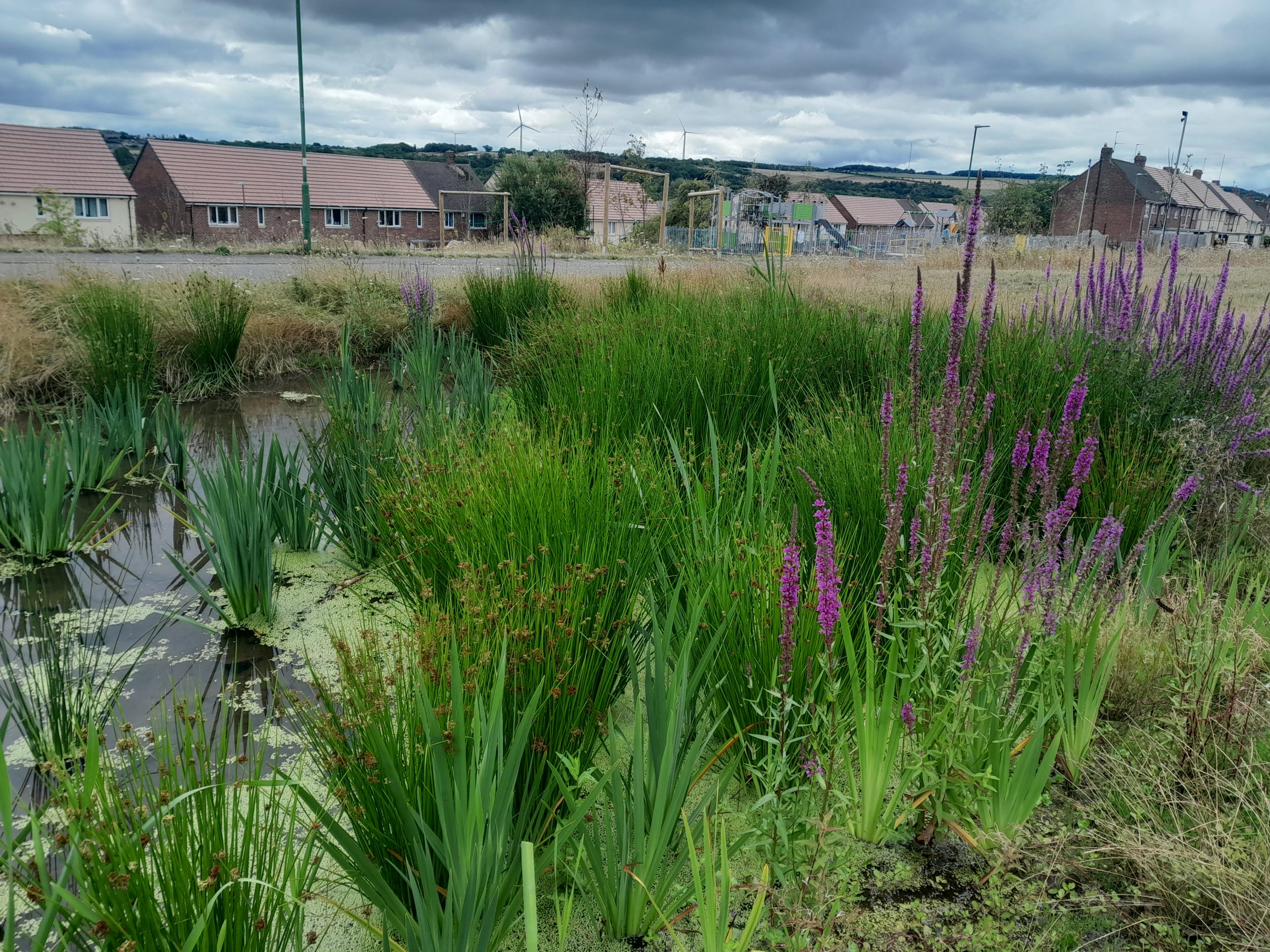
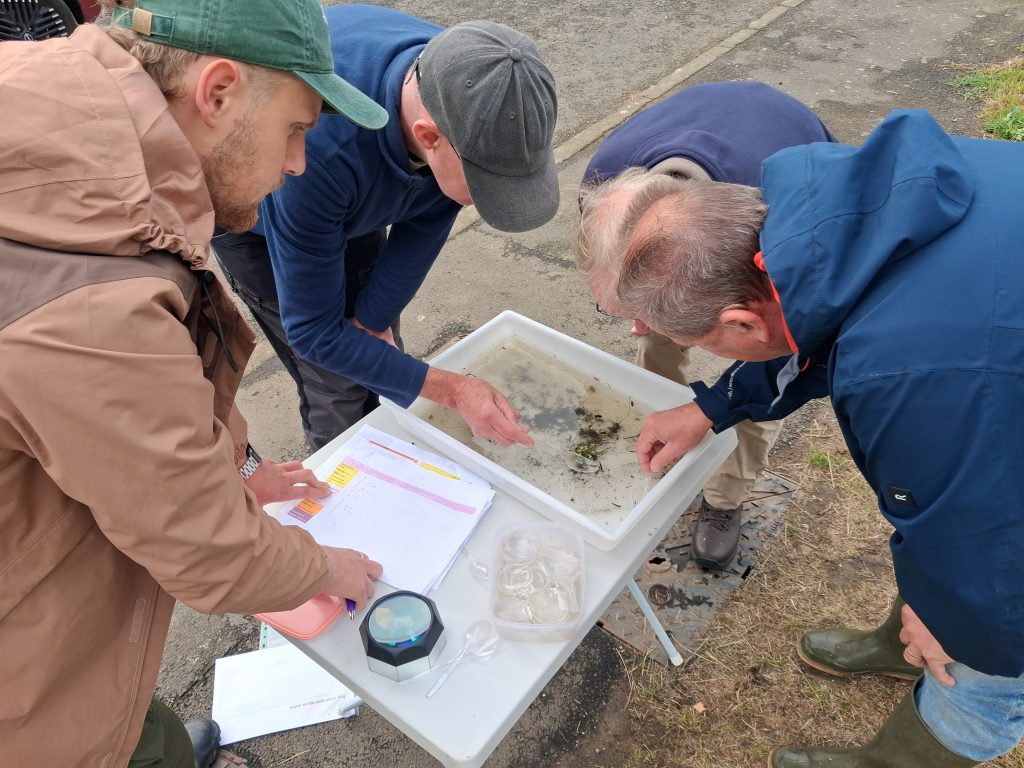
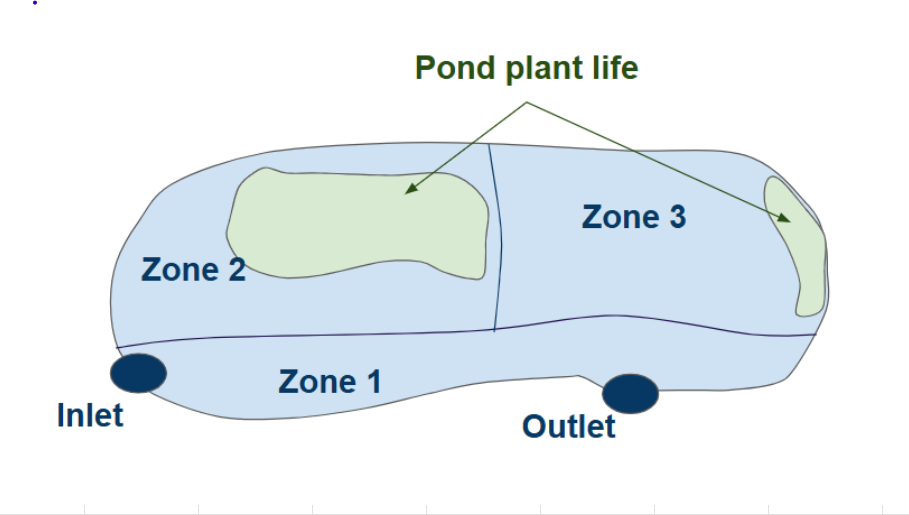
A sample was taken and analysed. This was compared to the data from previous surveys over the last 10 weeks. The diagram below shows the pond on Cleveland Terrace where the pond dipping took place. It was split into three areas to make identification easier. Three samples were taken on each occasion, one from each zone, to ensure the results are conclusive.
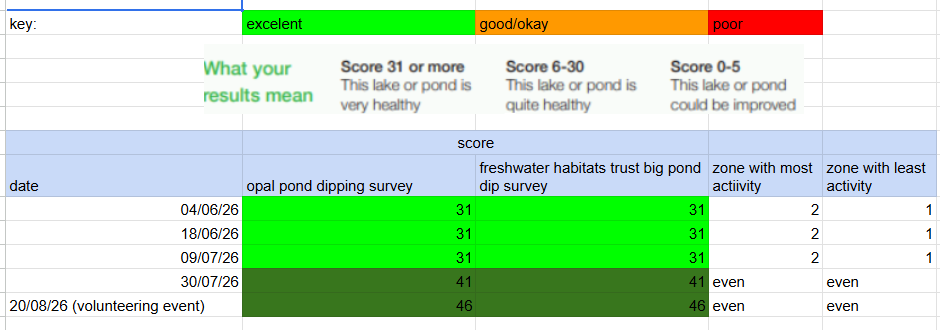
The results below show how the pond is maturing over the Summer months with the score increasing with each visit. This is not an indicator the area will continue to improve but can be looked at as an excellent start. Water loving plants have continued to thrive and attracted a nice range of invertebrates and other pond creatures. Since testing began the pond has been rated as excellent using the Opal water survey measuring method and scale which is an internationally recognised way to score ponds.
Brief details of the collection card for the event on 20th August are shown below.
| Type of pond animal | Quality index | Score | estimated number | notes | species seen | ||
| Cased caddisfly larvae | 10 | 0 | 0 | ||||
| Dragonfly larvae | 10 | 10 | 10 – 20 | ||||
| Alderfly larvae | 10 | 0 | 0 | ||||
| Damselfly larvae | 10 | 10 | 1-10 | ||||
| Caseless caddisfly larvae | 10 | 10 | 1-10 | ||||
| Mayfly/stonefly larvae | 5 | 5 | 1- 10 | mayfly | |||
| Water beetles and/or larvae | 5 | 0 | |||||
| Water bugs | 5 | 5 | 100+ | backswimmers, lesser water boatman | |||
| Pond skaters | 5 | 5 | 1-10 | ||||
| Water shrimps | 5 | 0 | 0 | ||||
| Water snails | 1 | 0 | 0 | ||||
| Water slaters | 1 | 0 | 0 | ||||
| Worm-like animals | 1 | 1 | 10-20 | worms, midge larvae | |||
| Total Pond Health Score = | 46 | ||||||
Thermal Imaging
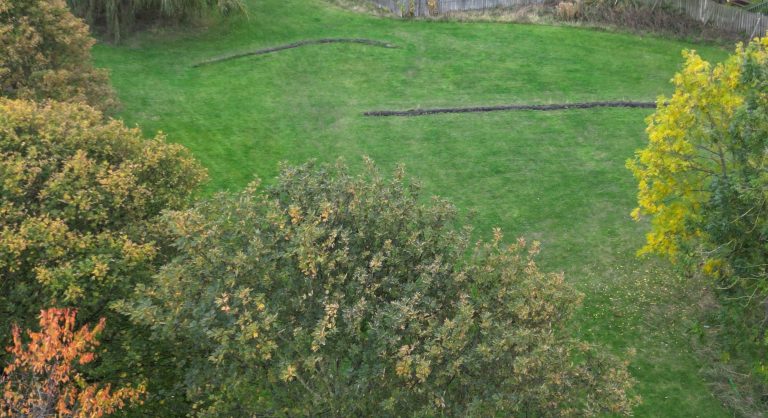
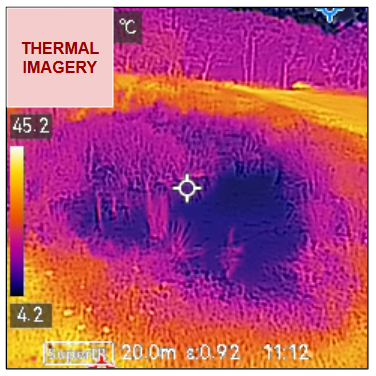
Our thermal imaging camera has also been effective in capturing the difference in temperature between the areas of short grass, the longer planted areas and pond.
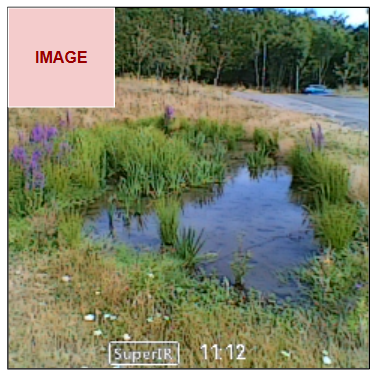
In the thermal image the darkest colours are the coolest and the lightest colours the warmest. Our camera shows the pond and surroundings are around the same temperature as the woodland with the tarmac and mowed areas much warmer.
Pollinator Survey and Bug Hunt
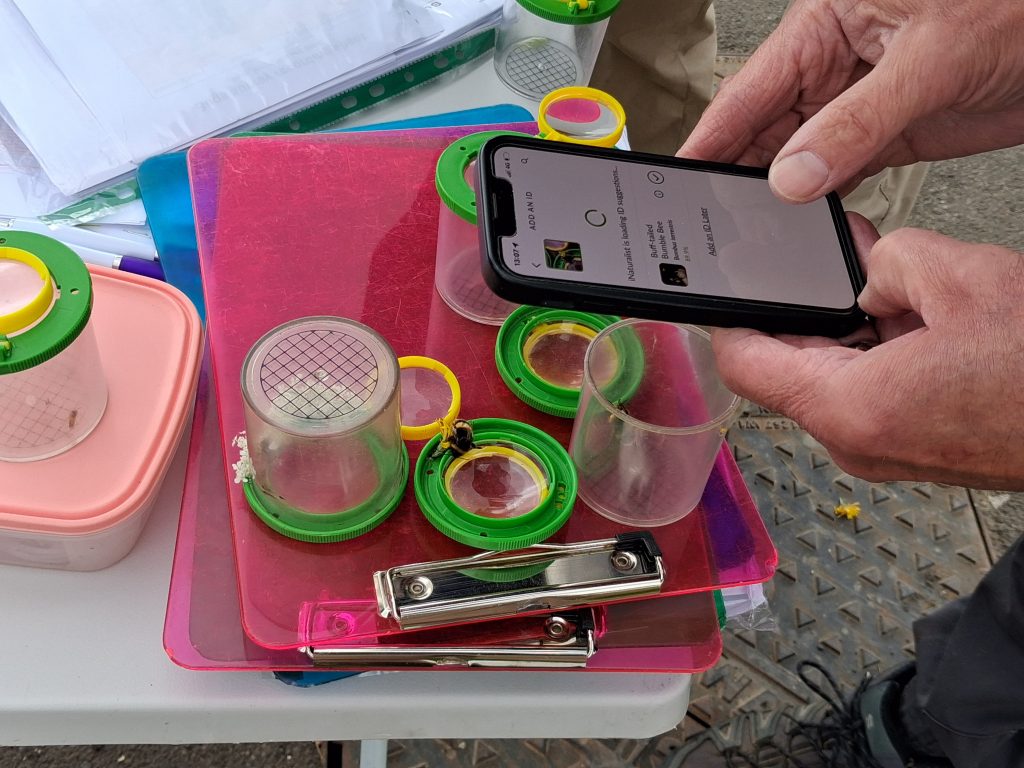
Pollinator surveys and bug hunts took place throughout the site. Volunteers were asked to place a cross on the map where they undertook their survey and record any findings.
Volunteers then used the iNaturalist app to record the findings with the list of species found here